

Pistachios
A heat-loving, salt-tolerant nut tree grown by Plantations International in Greece.
About Pistachios
The pistachio is a small tree of the cashew family from Central Asia and the Middle East. It is a desert plant that needs long, hot summers to ripen its nuts and a cool winter to complete dormancy, which makes the Mediterranean climate of Greece a good fit.
Trees are dioecious, with separate male and female trees, so orchards are planned around pollination. At ripening, the shell splits open naturally. Plantations International grows pistachios in Greece and manages orchards from budding through to harvest.
Ideal growing conditions
The site, soil and climate parameters our agronomists work to when developing a pistachio plantation.
Long, hot summers ripen the nuts
Needed to complete dormancy
Deep, well-drained sandy loam
Poor performance in humid climates
Tolerates saline irrigation water
Prone to root rot in wet soils
What pistachios are used for
Snack nuts
Roasted and salted in-shell pistachios.
Confectionery
Baklava, nougat and chocolate.
Pistachio paste
Ice cream, gelato and pastry.
Kernels
Shelled kernels for bakery and cooking.
Oil
Gourmet cold-pressed oil.
Hulls
Composted or used as feed.
A premium Mediterranean crop
Pistachios command premium prices in snacking and confectionery, and demand has grown with interest in healthy, plant-based foods. Iran, the United States and Turkey are the largest producers.
Greece has a long pistachio tradition, and the island of Aegina’s pistachio holds Protected Designation of Origin status in the European Union. Trees are long-lived, so a well-planned orchard produces for decades.
From nursery to harvest
- 1Nursery
Rootstock
Rootstock seedlings raised in the nursery.
- 2Autumn
Budding
Selected male and female varieties budded on.
- 3Years 1–4
Training
Trees trained into a modified open-vase shape.
- 4Year 5
First crop
Early bearing begins.
- 5Year 12
Full production
Mature orchard yields for decades.
How we manage pistachios
Pollination
One male tree for every 8–10 females ensures fruit set.
Irrigation
Drip and mulching; waterlogging avoided.
Nutrition
No fertiliser in year one, then 45–65 kg nitrogen per acre in split doses.
Harvest timing
Picked over 6–10 days once hulls separate easily from shells.
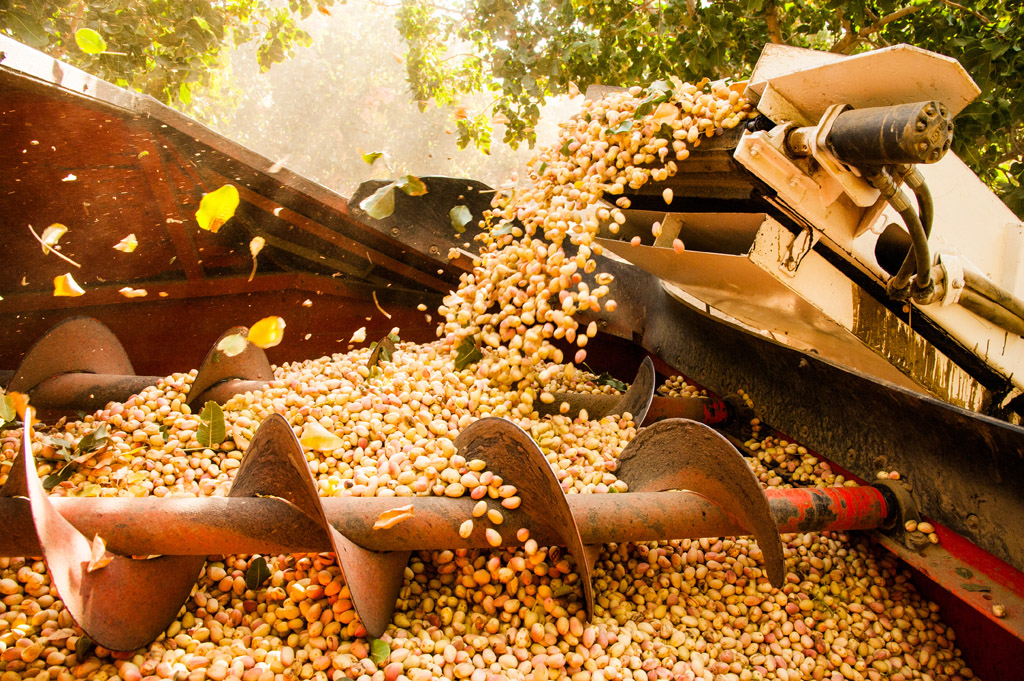
Pistachios in the field


Pistachios: common questions
Where does Plantations International grow pistachios?
In Greece, whose hot summers and cool winters suit the tree.
Why do pistachio orchards need male trees?
Pistachios are dioecious. Male trees supply the pollen, at about one male for every 8–10 female trees.
How long until pistachio trees produce?
Budded trees start bearing around year 5, give significant crops by years 7–8 and reach full production around year 12.
What soil do pistachios need?
Deep, well-drained sandy loam with a pH of 7.0–7.8. They tolerate salinity but not waterlogging.
Related crops


Develop a pistachio plantation with us
Request a free initial consultation with our plantation development and management team.